First Aid Safety Briefing
This section provides a brief overview of basic first aid knowledge that might come in handy during any kind of journalistic assignment or commission, including civil unrest, environmental disaster, and many other situations.
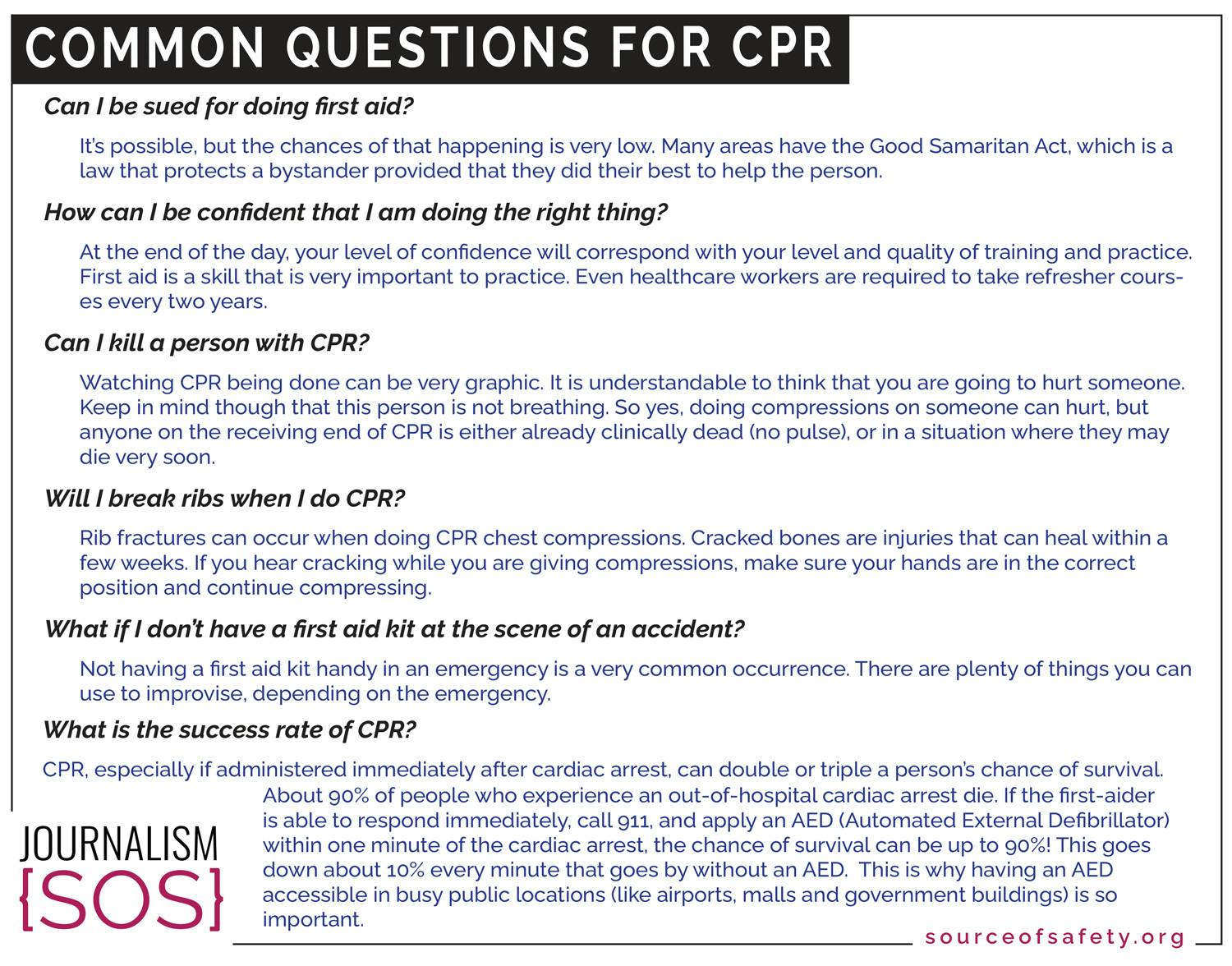
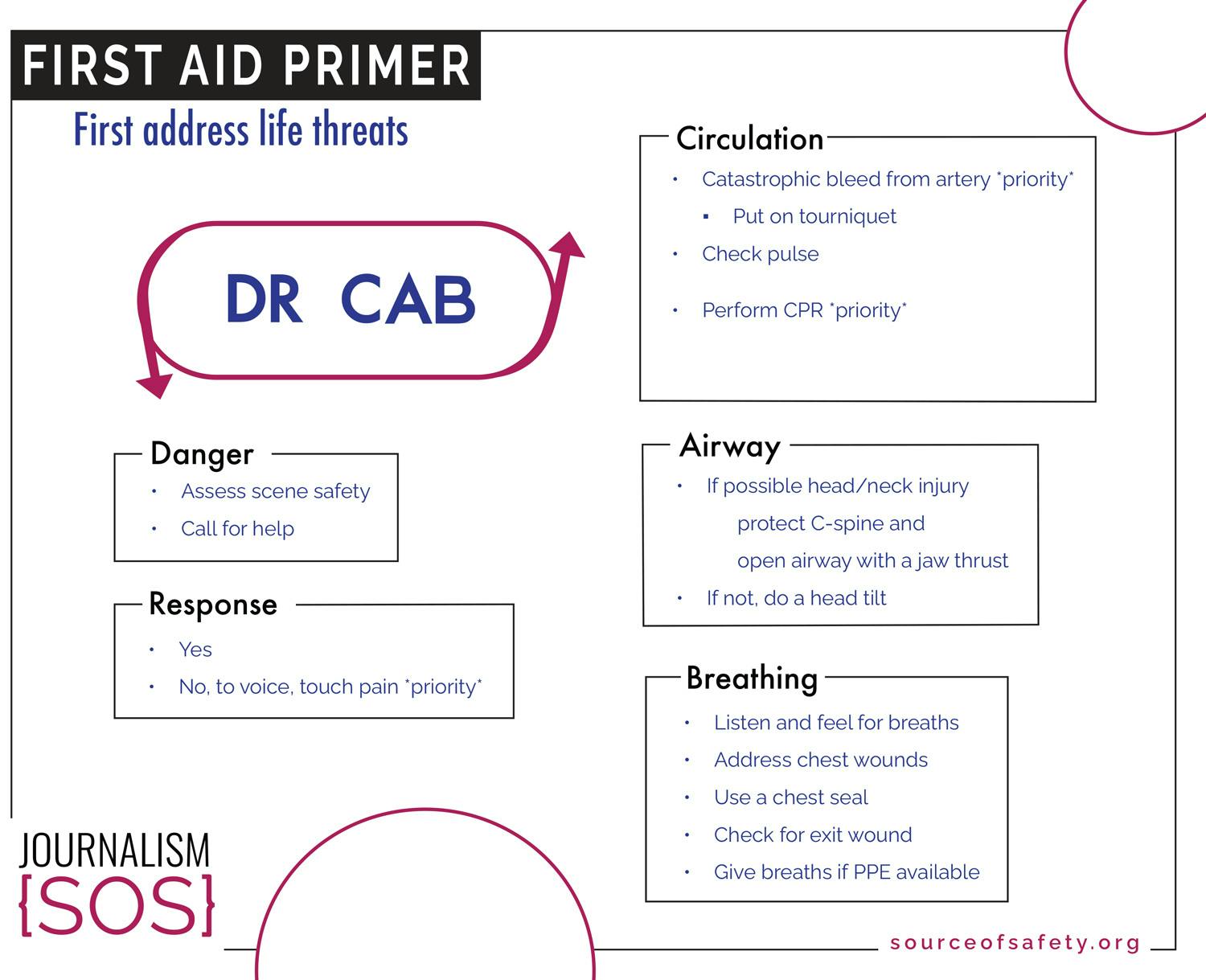
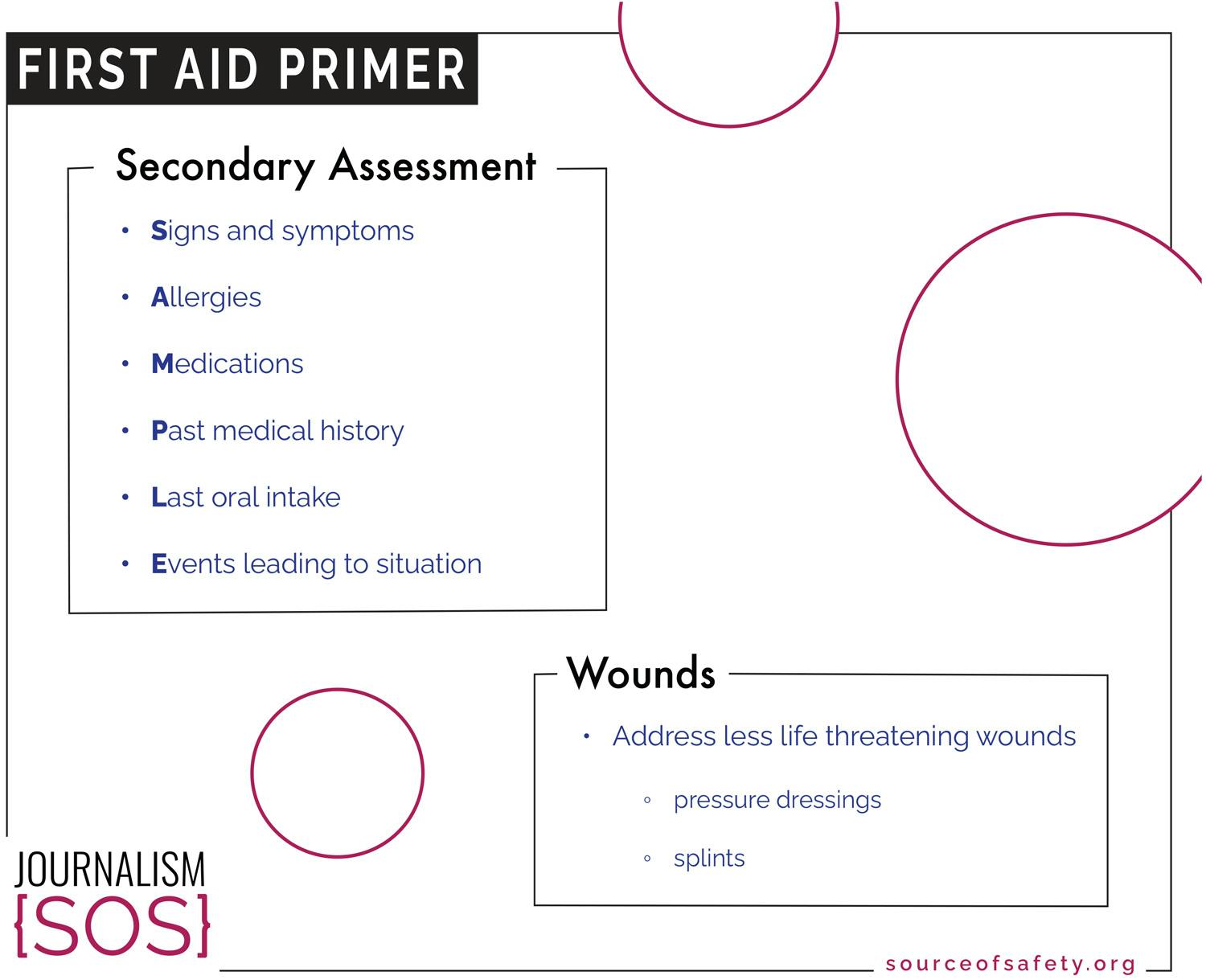
The following Top Tips, Gear List and Resources represent a brief introduction to applying first aid. The information and resources are not comprehensive nor do they offer sufficient preparation for reporting in any war or conflict zone. We also provide a First Response Primer and CPR Primer for use in the absence of professional medical help during an emergency. These resources should not be used in lieu of seeking help from a medical professional in the event of a medical emergency! Consider taking an in-person CPR or First Aid training/workshop/class to be more knowledgeable about these methods and tools. We encourage you to review the more expansive list of first aid resources in the keyword-searchable J-SOS Safety Resource Database.
First Aid Top Tips
- After an Assignment
Debrief and process lessons learned
After assignments, set aside time to discuss any issues that arose and/or lessons learned about physical and health safety with your reporting team and editors as needed.
- During an Assignment
Carry an information card with you
You should always have n information card on hand that includes your name, blood type, allergies, medications, relevant medical conditions, vaccinations (if required), and emergency contacts.
- During an Assignment
Size-up the scene. Is their immediate danger? (D)
When experiencing a medical crisis, take a methodical approach, regardless of the situation. When you find yourself in a situation that requires a first aid response, your goal is to stabilize physical safety as much as possible until professional medical care can arrive. Your first step is to address any potential life threats to you or any others who may be in medical crisis.
- During an Assignment
Carry a personal first aid kit (PFAK), tailored to the location and needs of your assignment.
See first aid gear suggestions below for a more complete list.
- Before an Assignment
Consider what available medical resources you might need and what is accessible
Some things you might want to locate, familiarize yourself with or have on hand, if possible:
-
Automated External Defibrillator (AED)
-
First aid kit
-
Local fire department or EMS
-
Nearby hospitals or clinics
-
Any medical training your colleagues have had
More Info
-
- Before an Assignment
Consider mental health needs pre, during and after the assignment
Chronic stress and trauma affect awareness, decision-making and overall safety during assignments. Planning ahead mitigates burnout and helps sustain you for the long haul. Consider what you can do for your mental health to prepare for a potentially difficult assignment. What small rituals can offer grounding and safety during an assignment?
- After an Assignment
Focus on self-care after a difficult reporting experience
Check in with your physical and mental wellness. How have you been impacted by this reporting experience?
What can you do for yourself to rest, process and decompress?
Try to schedule decompression time away from work entirely or away from more physically and mentally demanding reporting assignments.
- For more on mental health and trauma-informed practices, see the Trauma Briefing
- After an Assignment
Continuously seek available first aid education and get skills practice
Some key skills to stay refreshed on:
-
How to apply a tourniquet
-
Using pressure bandages
-
Splinting
-
CPR
*See the CPR Primer below
-
- Before an Assignment
Consider what you can do for yourself to rest, process, decompress and find support after
Consider what you can do for yourself to rest, process, decompress and find support after. Line up those support systems for you to easily engage when you need them later.
*See the Trauma Briefing for more on self-care. - During an Assignment
Call for help and then do the primary assessment (RCAB)
If possible, call or send for help, then follow the RCAB method: Check for a verbal response (R) from the person who needs first aid.
-
Confirm a pulse. (C)
-
Check airways (A)
-
and confirm they are breathing. (B)
-
First Aid Gear Checklist
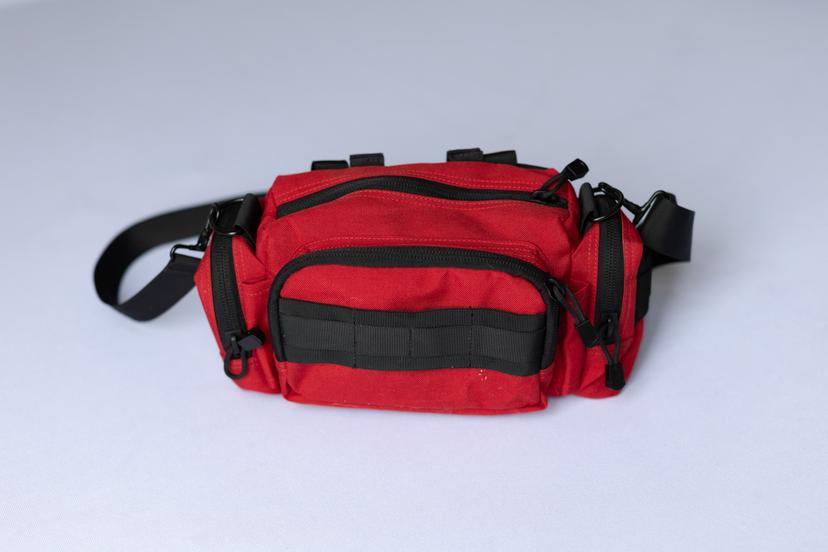
Bag
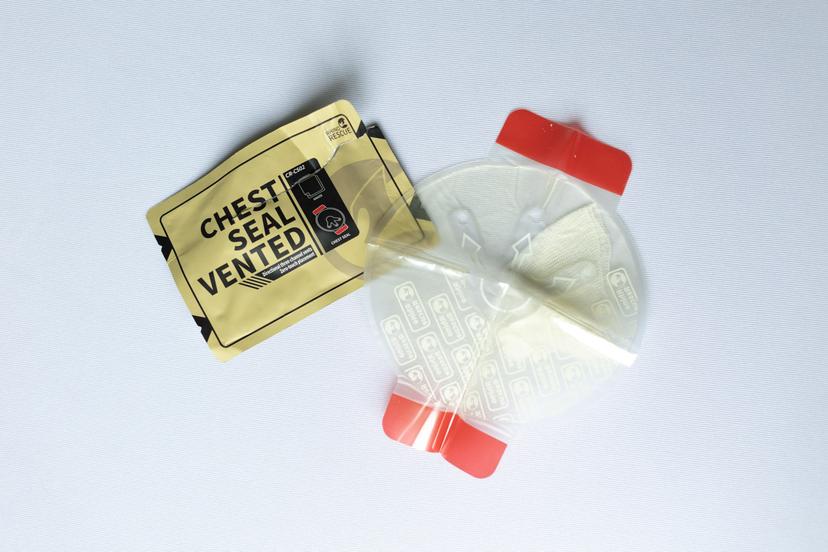
Chest Seal
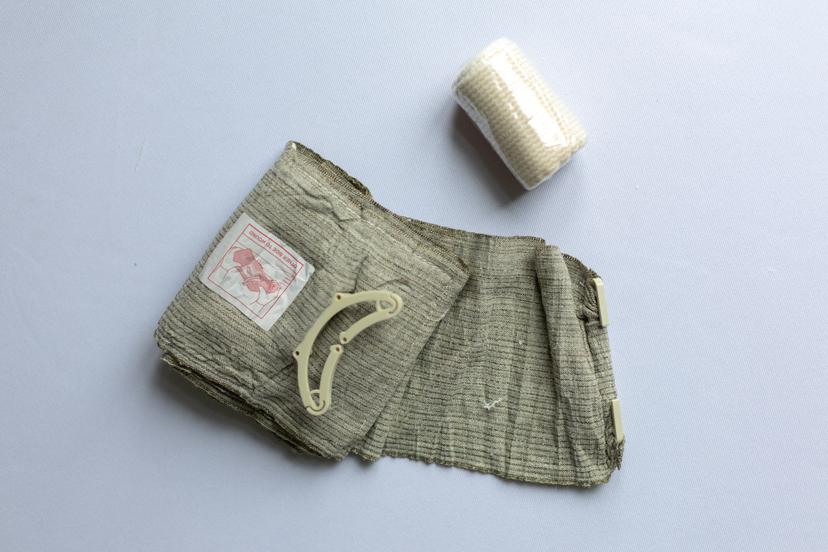
Compression Bandage
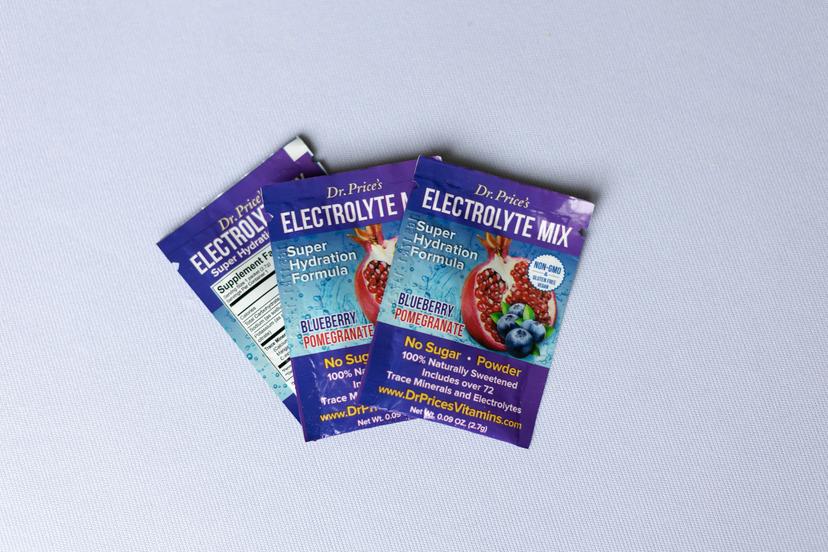
Electrolytes
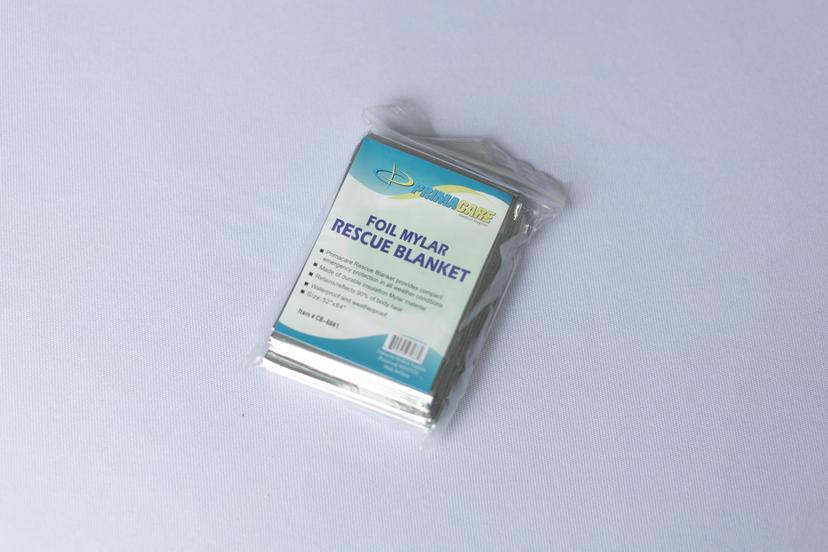
Emergency Blanket
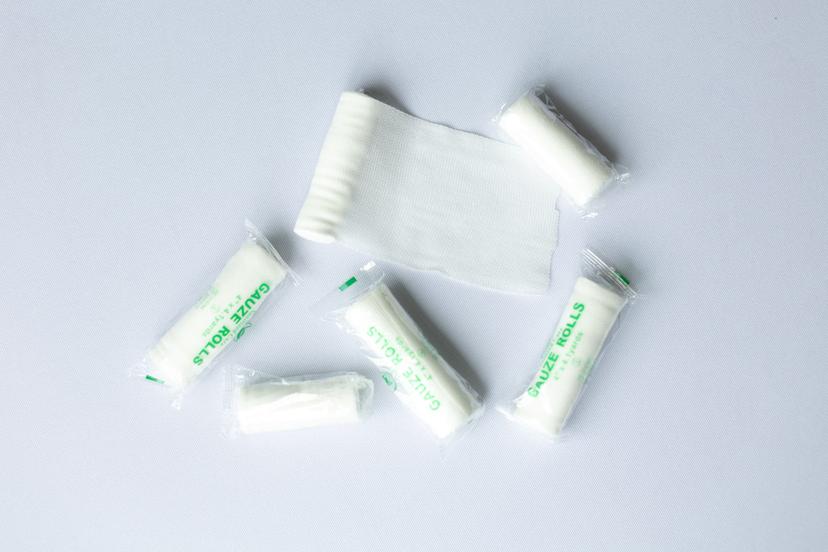
Gauze
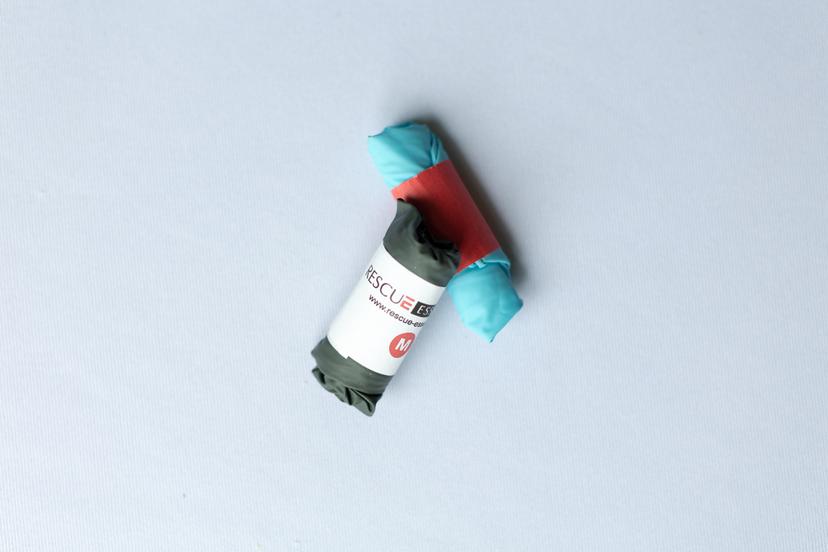
Gloves
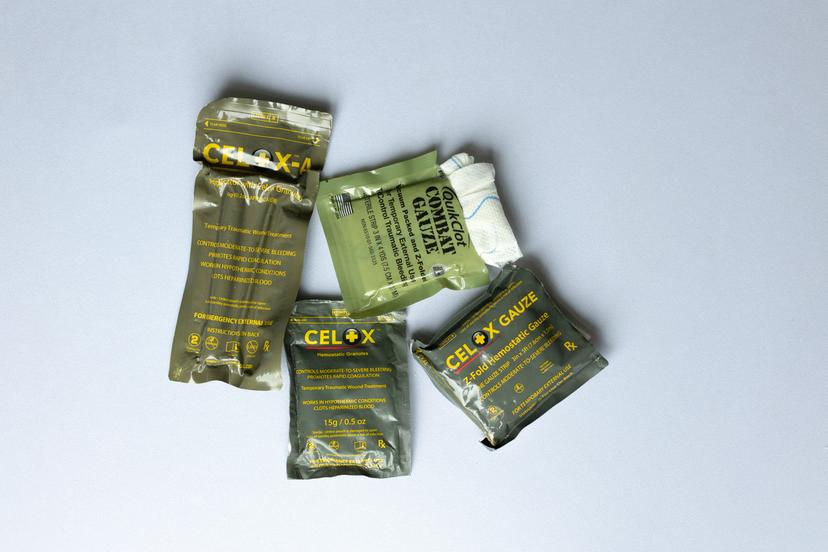
Hemostatic Supplies
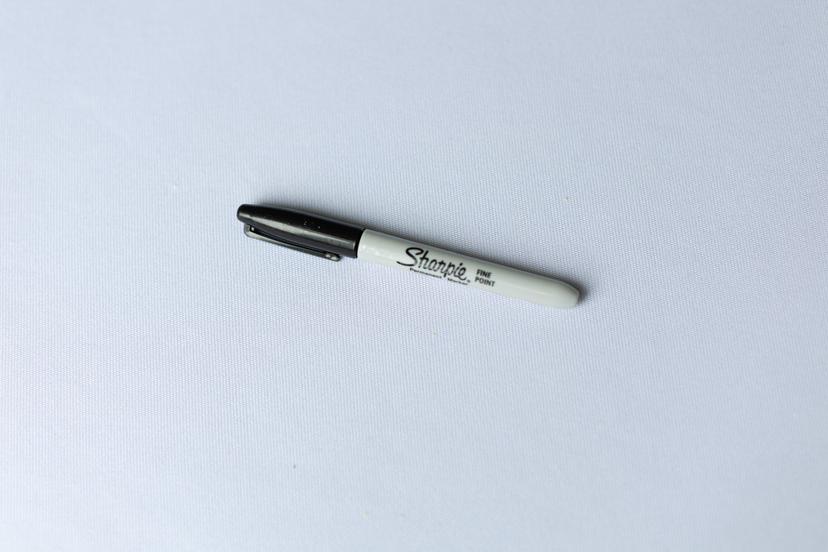
Marker
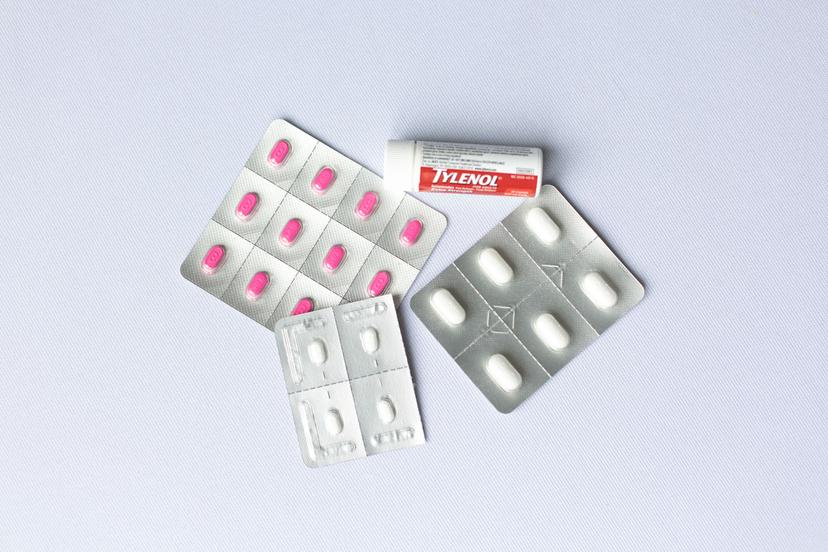
Meds
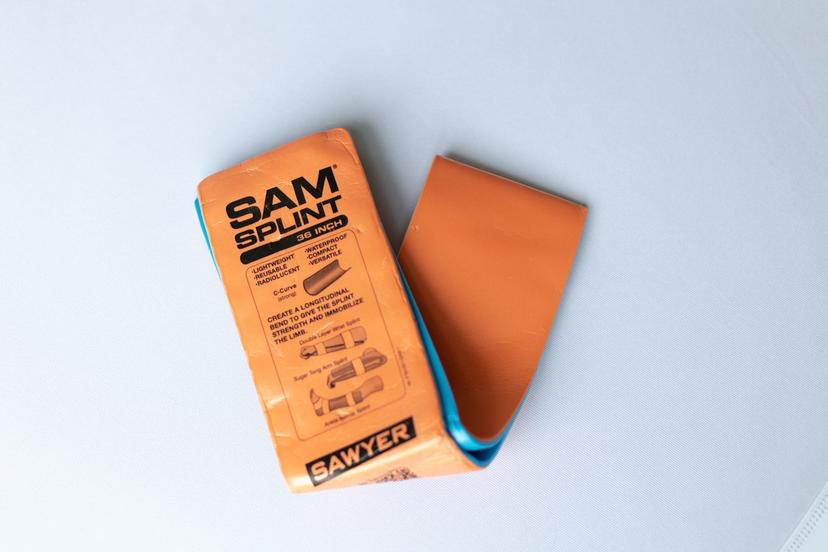
Splint
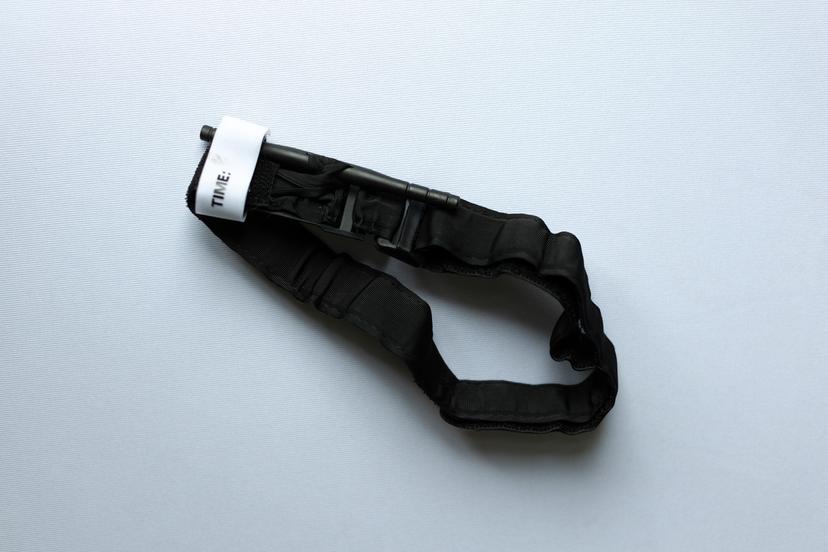
Tourniquet
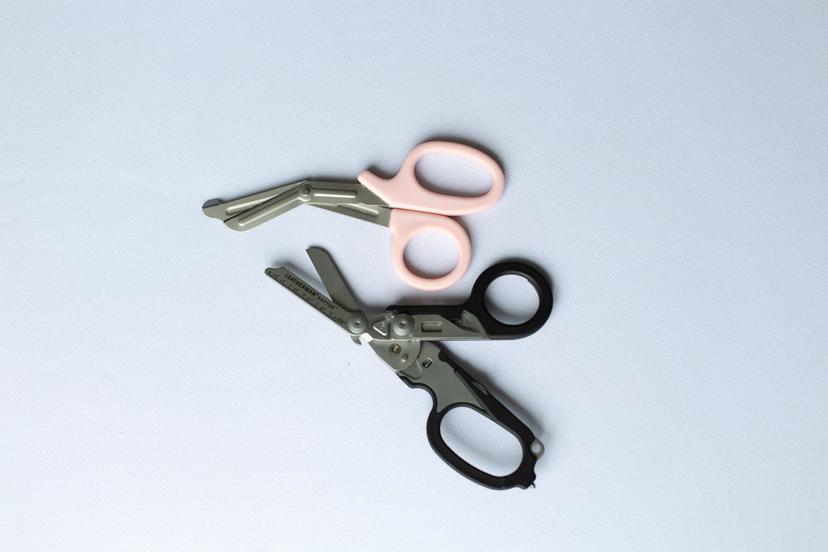
Trauma Shears
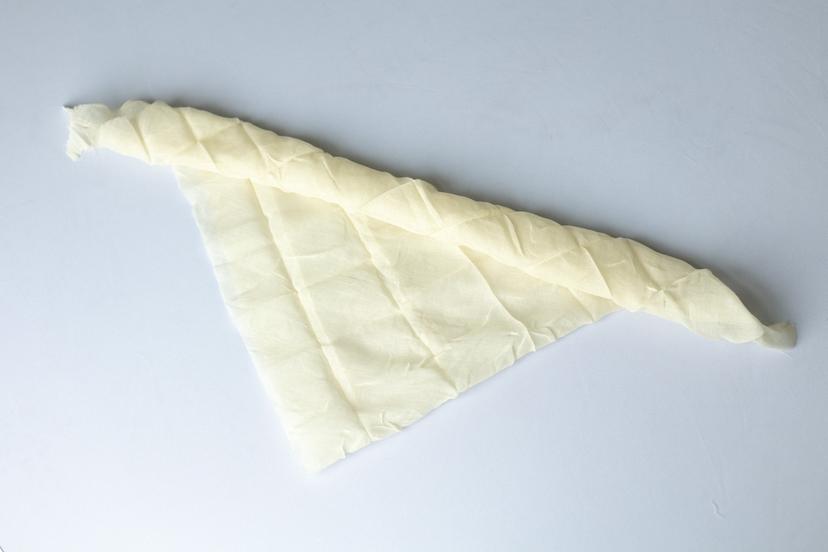
Triangle Bandage
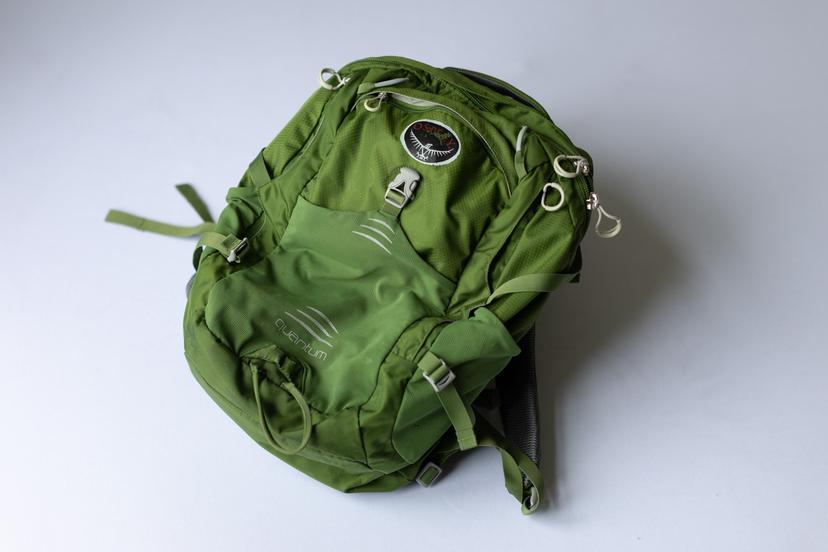
Grab Bag
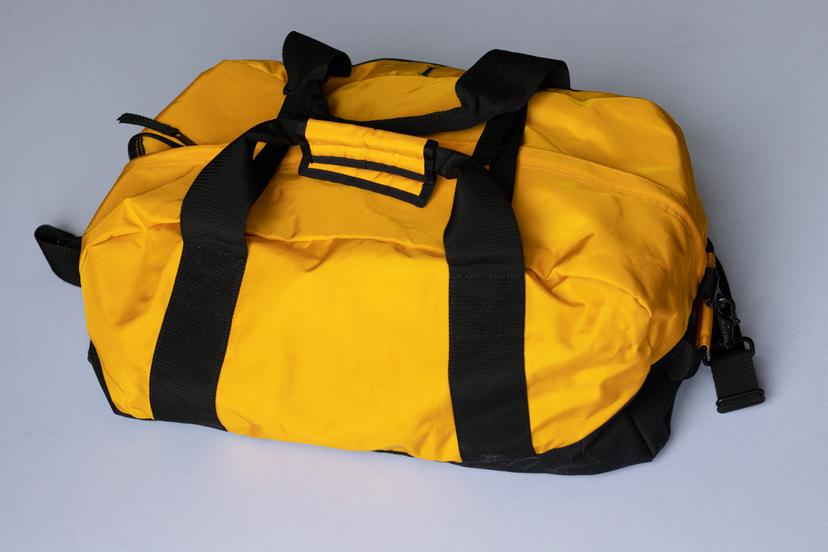
Grab Bag

Comms
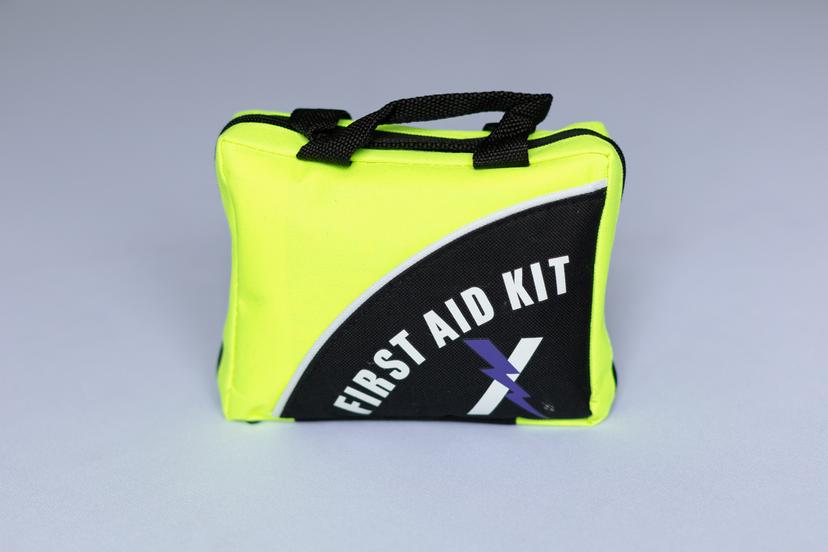
First Aid Kit
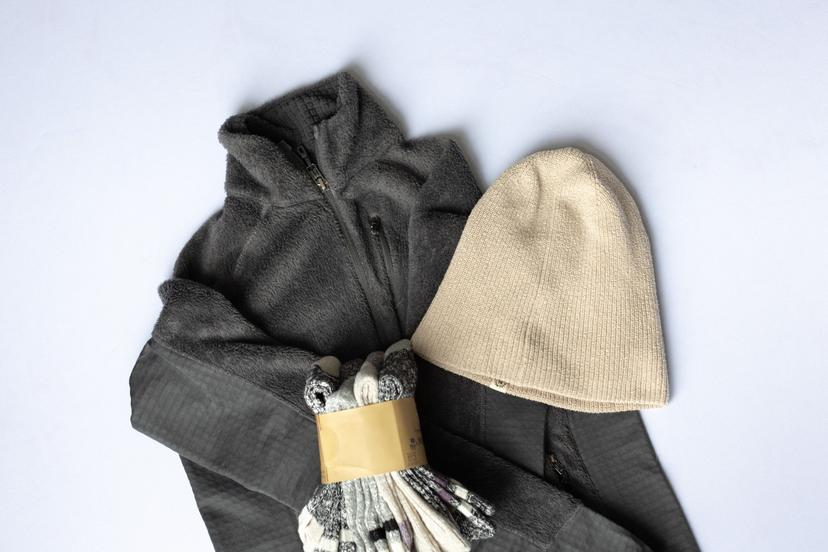
Jacket, Hat & Socks
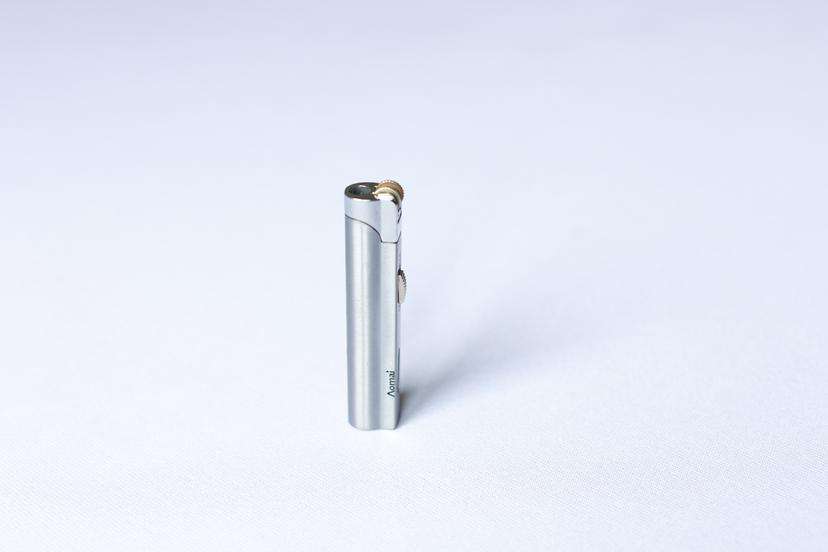
Lighter
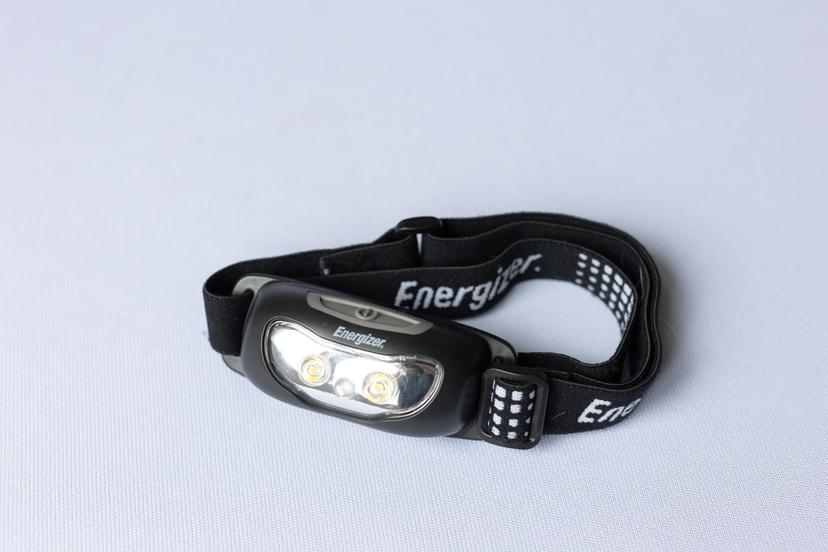
Light Source
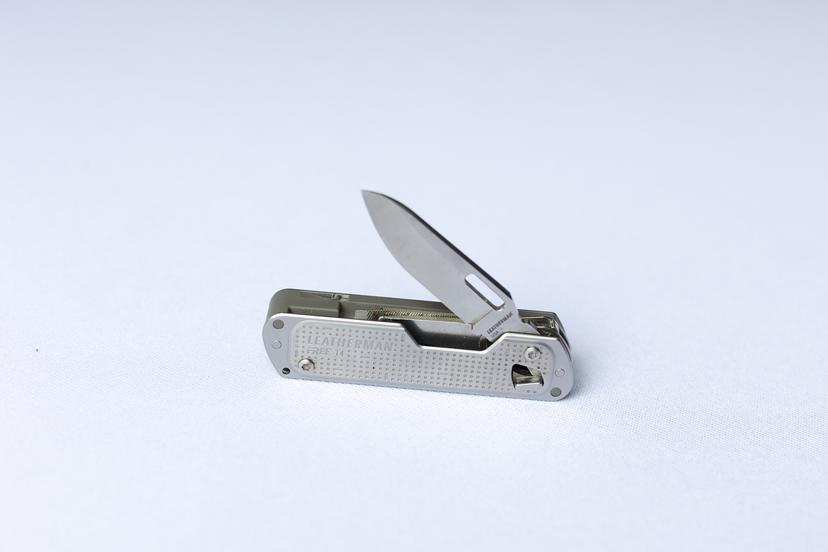
Pocket Knife
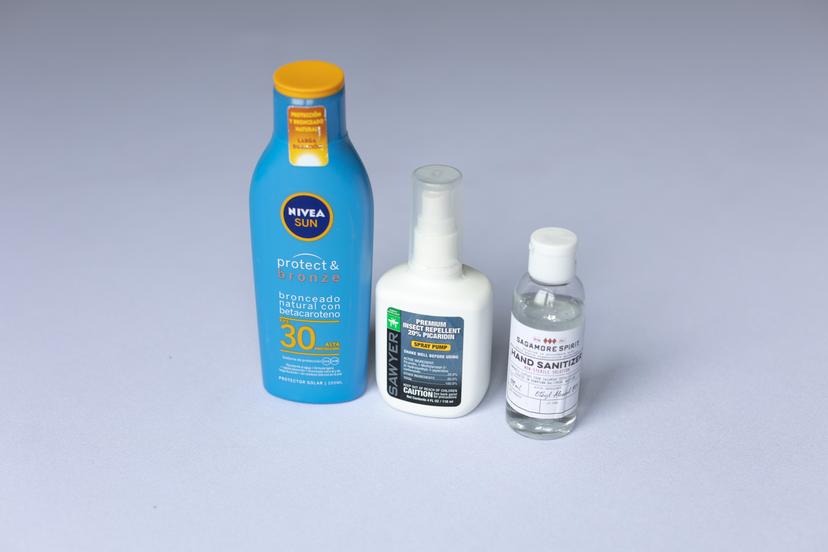
Sanitizer & Sunblock
Toilet Paper
Water
Basic Medical / First Aid Kit
- Disposable gloves
- Antiseptic cleanser
- Bandages: gauze, ace wrap, cravat (triangle bandage)
- Surgical tape
- Bandage scissors or trauma shears
- Tourniquet
- Medications (see further details expanded on below)
- Permanent marker (most important use is marking for Tourniquet)
Add as Needed
Tailor to your assignment needs
- Antiseptic cleanser
- Alcohol or sterilizing swabs
- Bandages, dressings, pressure dressings: ACE wrap, gauze, cravats
- Surgical tape
- Trauma shears
- Tourniquet
- Hemostatic trauma dressings
- Flashlight
- Splints
- Thermometer
- Hand sanitizer
- Mask and gloves
- CPR shield
- Chest seal dressings
- Ice and hot packs
- Tweezers
- Emergency blanket
Medications
- Antihistamine cream or tablets
- Antibacterial ointment
- Analgesics
- Antidiarrheal
- Antibiotics
- Burn gel
- Nasal decongestant
- Oral rehydration salts/electrolyte powder
- Emollient eye drops
- Potable water purification tablets
Grab Bag / Go Bag Supplies
This is in case of emergency evacuation, in high risk assignments or to have in your car or home in case of emergency situations.
- Day pack
- Water and or water treatment/purifiers
- Food (MREs, protein bars, non perishable items)
- Personal med kit or IFAK (IFAKs are premade trauma kits containing essential life-saving materials, bleeding control and major wound treatments.)
- Spare underwear, socks, clothing
- Hat
- Light jacket or thermals
- Communication device (cell phone/sat phone)
- Communication device: portable satellite internet communications (BGAN)
- Portable generator (Goal Zero)
- Light source, batteries
- Lighter
- Pocket knife
- Toiletries
- Toilet paper/wet wipes
- Sunscreen
- Insect repellent
- Hand sanitizer
- Lightweight blanket
- Earplugs
- PPE (bullet proof vest, helmet, eye protection, gas mask, N95)
- Photocopy of important national and local docs like driver license, official ID, birth certificate, social security card, etc.
- ID
- Cash
- Travel tickets
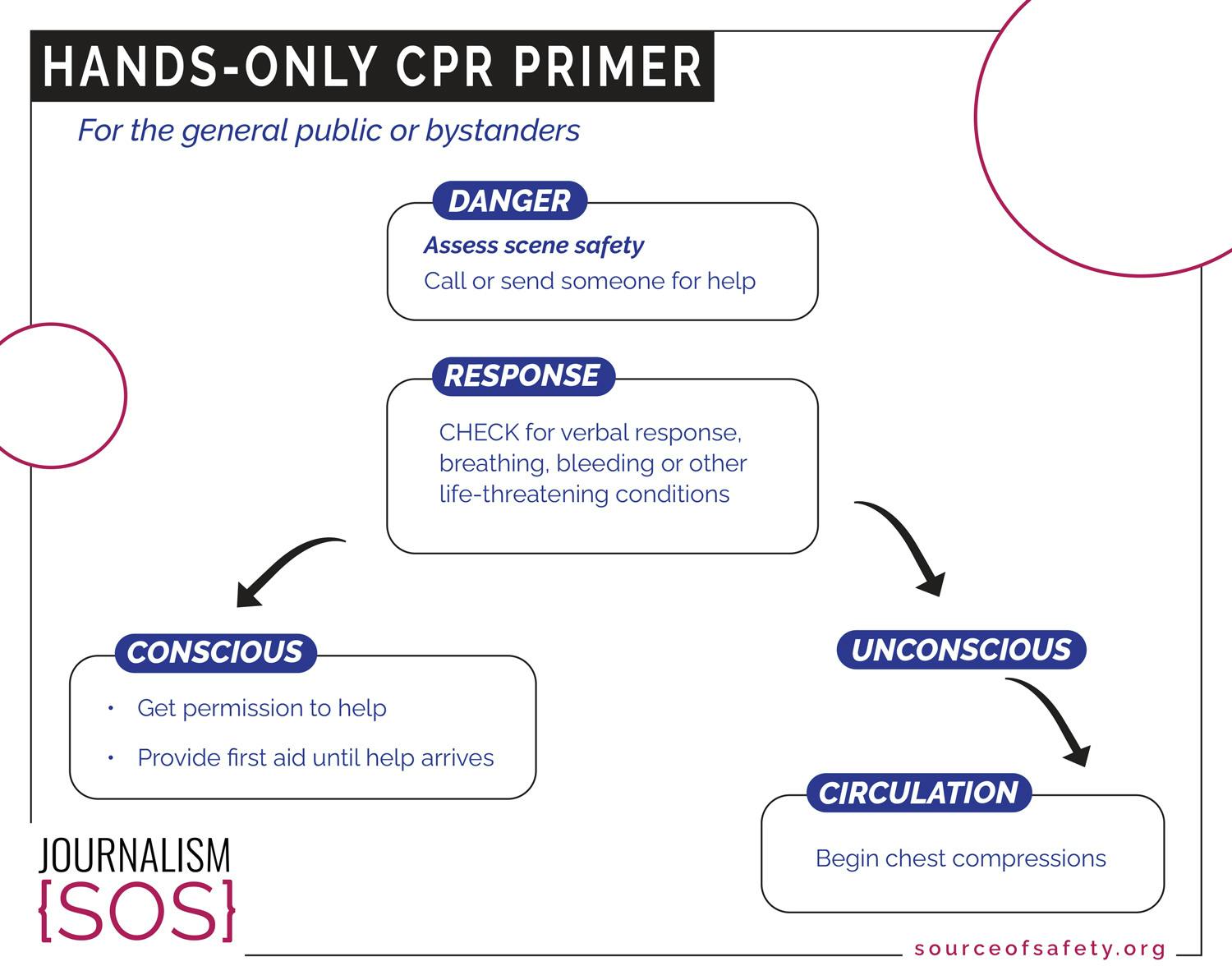
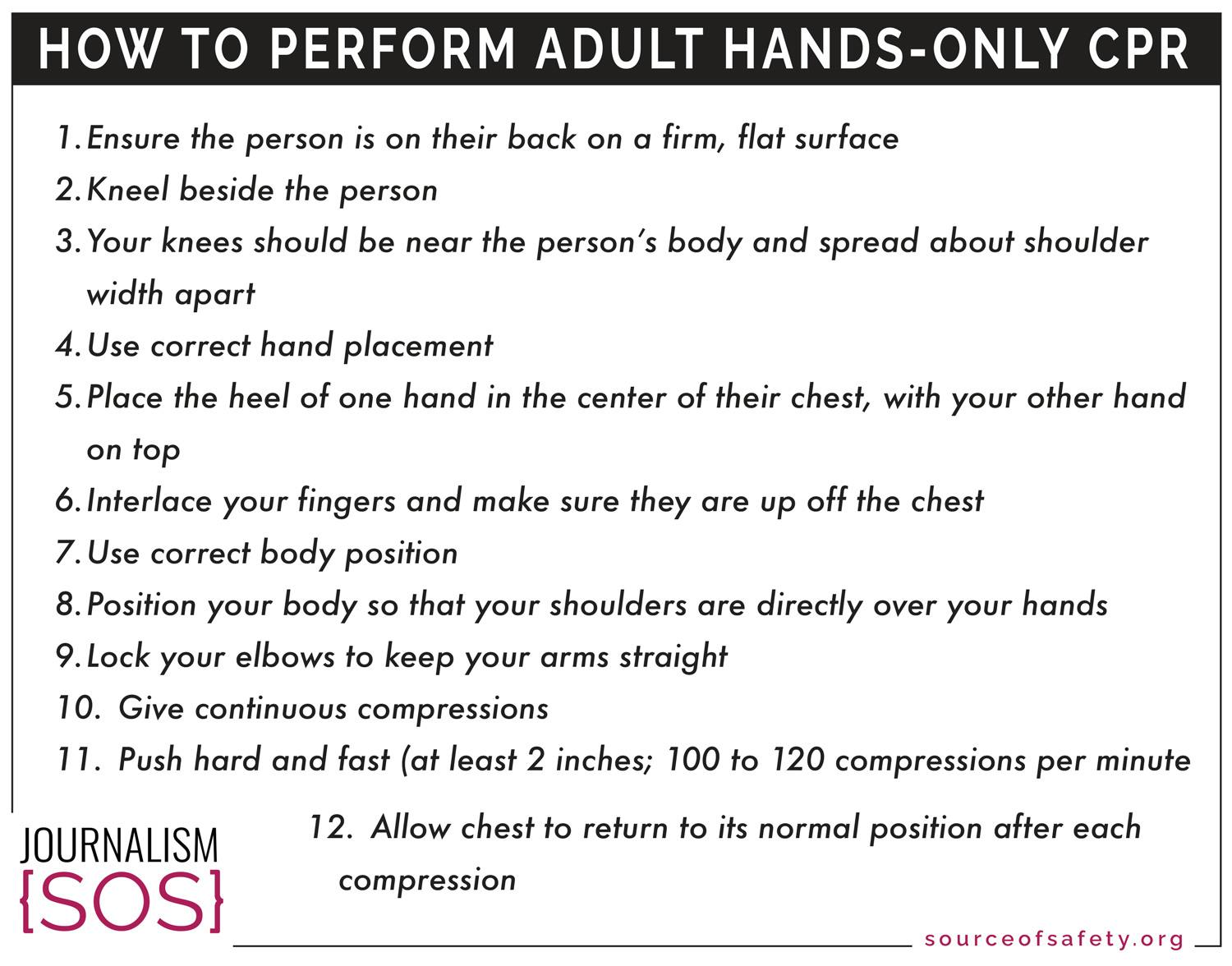
First Aid Scenario
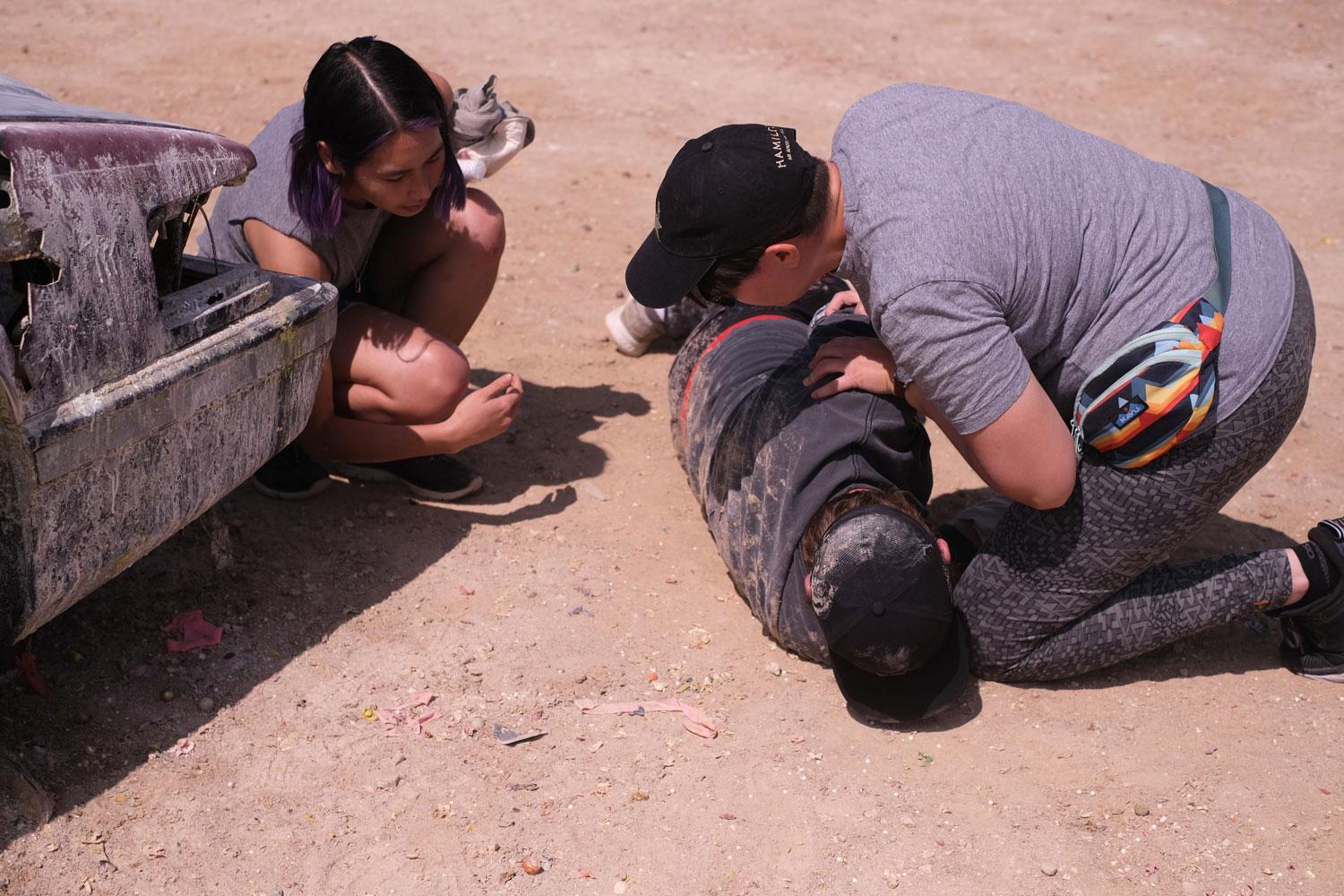
You are a student journalist, covering election night at the headquarters of a far-right U.S. Senate candidate in Orange County, California who is expected to win. Roughly 100 people are protesting outside the campaign headquarters. After the race is called for the candidate’s more liberal opponent, tensions escalate outside as proponents of the different political groups clash. You are heading outside to report on the developing story when you hear what sounds like shots and screams. As you exit, people are running in various directions so you also run. As you seek cover behind a building, you notice a person hunched over on the sidewalk near you, breathing rapidly with their eyes closed. You approach to see how you can help.
- Remember D-RCAB. First check the surrounding threats. Are either of you in immediate environmental danger? Have the shots stopped? Are there other people or moving vehicles around? Is it safe to assist on location or do you need to move?
- Are you working alone or is there someone with you who has more medical knowledge? Is there medical staff nearby who can offer support? If not, call for help.
- What available first aid resources do you have access to? Do you have a first aid kit?
- Check on the responsiveness, circulation, airway, and breathing of the person needing help. *Review First Aid First Response Primer for more details